
The Rise of AI Personal Shoppers
Sophie C.
AI personal shoppers are officially having a moment. And not in the “cute app feature” way—more like the “this is going to change how people buy clothes” way.
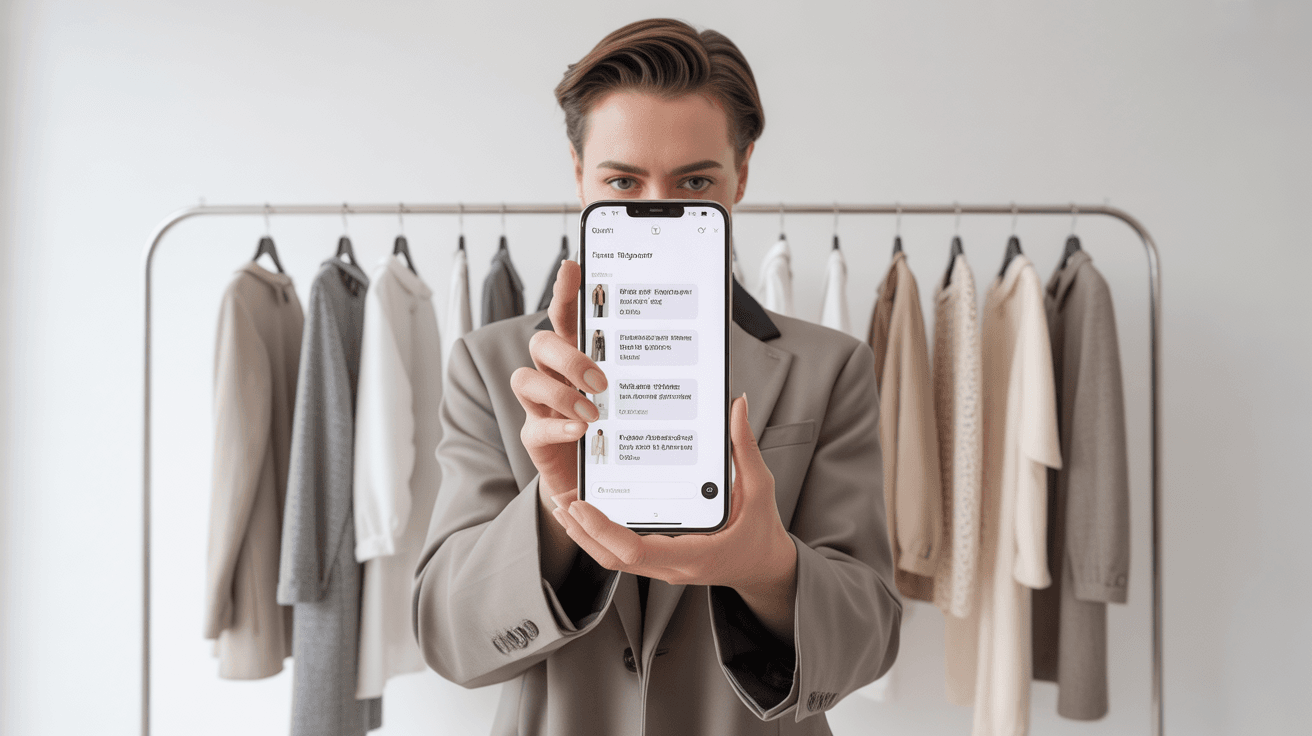
If you’ve ever asked yourself questions like: “What looks good on me?” “What should I wear to this event?” “How do I stop wasting money on stuff I never wear?”… AI is now being marketed as the answer. You type in what you want, your budget, your vibe, your size, and suddenly you get outfit ideas like you’re texting a stylist.
But here’s my honest take as someone who watches fashion trends for a living: AI personal shopping can be amazing—or it can be a fast track to buying a closet full of things that look good on screen but don’t make sense in your real life.
So let’s break it down properly: what AI personal shoppers are, why they’re rising now, what they do well (and badly), and how to use them like a pro.
What is an AI personal shopper (in real-life terms)?
An AI personal shopper is basically a recommendation engine on steroids. Instead of you scrolling endlessly through a store, the AI tries to understand your preferences and make choices for you—like a digital stylist.
Depending on the platform, an AI shopping assistant can:
- suggest outfits based on your style keywords (“minimal,” “Parisian,” “streetwear,” “quiet luxury”)
- recommend pieces for a specific occasion (wedding guest, work trip, date night)
- build a capsule wardrobe list
- find dupes for high-end items
- suggest sizes and fit adjustments based on reviews or your previous purchases
- filter by budget, brand preferences, and ethical goals
AI is also showing up in the background of fashion retail in bigger ways—helping brands predict demand, show better product recommendations, and personalize shopping experiences. If you want a broader overview of how AI is used in retail overall, IBM has a clear breakdown on AI in retail use cases. Source: IBM – AI in retail
The key idea:
AI personal shopping isn’t trying to replace fashion taste. It’s trying to replace the time and mental energy you waste searching.
Why AI personal shoppers are rising so fast right now
This trend didn’t appear out of nowhere. It’s happening because a few things clicked at the same time:
1) People are burned out from online shopping
Scrolling used to feel fun. Now it feels like homework.
Most shoppers are exhausted by:
- too many options
- constant micro-trends
- inconsistent sizing across brands
- returns that feel like a part-time job
- decision fatigue (“is this actually me?”)
AI personal shoppers promise relief: fewer choices, better recommendations, faster decisions.
2) “Personalization” is now expected
We’re used to Netflix recommendations, Spotify playlists, and TikTok feeds that read our minds. Shopping is catching up—fast.
McKinsey has covered how personalization can impact customer experiences and business growth, and fashion retailers are absolutely paying attention to that. Source: McKinsey – Personalization
3) Style content is everywhere (so AI has more data to “learn” from)
Fashion is one of the most visually searchable categories online. Outfit photos, Hauls, “Get Ready With Me,” celebrity looks, runway clips—everything is tagged, categorized, and endlessly repeated.
AI systems thrive in environments like that because patterns become very obvious very quickly.
What AI personal shoppers do really well (and why people love them)
I’m not anti-AI here. In fact, some tools are genuinely helpful—especially if you’re starting from scratch or feel stuck in a style rut.
Here are the best strengths I’m seeing:
1) They help you define your style faster
A lot of people don’t have “bad style.” They have undefined style.
AI is good at taking messy preferences like:
- “I like clean outfits but not boring”
- “I want to dress more elevated but still comfortable”
- “I like streetwear but also minimal”
…and turning them into something more actionable.
2) They build outfits, not just product links
Most people don’t shop one item at a time. They shop for a version of themselves.
AI personal shoppers can create full outfit combos so you stop buying random pieces that don’t match anything you own.
3) They can be budget-smart (if you tell them to)
AI works best when you’re specific. If you say “under $80, neutral colors, breathable fabrics,” you’ll usually get much better recommendations than you would from a store homepage trying to sell you “new arrivals.”
Best tip:
The quality of AI outfit recommendations depends on the quality of your prompt. “Help me dress better” is vague. “3 outfits for a work trip, neutrals, comfortable shoes, under $300 total” is gold.
Where AI personal shoppers fall short (and what most people miss)
Now for the side people don’t talk about enough: AI styling can be wrong in ways that waste your money.
1) Fit and proportions are still hard to “predict”
Even if AI knows your size, it doesn’t always understand your proportions, your comfort preferences, or what you personally consider flattering.
A blazer that looks stunning on the model can look awkward on someone with different shoulders, chest, or height.
2) AI can push you into sameness
Because AI learns from patterns, it often recommends what’s popular or widely liked—which can flatten personal style into a “Pinterest uniform.”
You might notice the same look repeated:
- oversized blazer + wide-leg trousers
- neutral knit + white sneakers
- basic capsule formulas that look fine but not memorable
If you want a style that actually feels like you, you’ll need to add human taste and experimentation on top.
3) It doesn’t know your real life (unless you tell it)
AI doesn’t automatically know you hate ironing. Or that you walk 20 minutes to work. Or that you’re always cold. Or that you refuse to wear anything dry clean only.
That’s why AI styling improves massively when you add lifestyle context.
How to use AI personal shoppers like a stylist (not like a shopping addiction)
Here’s the part that actually matters: how to use this technology without letting it drain your money or turn your closet into chaos.
My 7-step method (super practical)
- Start with your lifestyle first. Tell the AI what your week looks like (work, errands, events, climate).
- Set a strict budget. Not “cheap,” but a real number.
- Give 3 style words. Example: “clean,” “soft tailoring,” “modern.”
- Add 2 “never” rules. Example: “no itchy fabrics” and “no heels.”
- Ask for outfits, not items. Make it build looks with shoes + bag + layers.
- Shop your closet first. Match recommendations to things you already own before buying anything new.
- Only buy what completes multiple outfits. If it works in one outfit only, it’s not a smart buy.
My personal filter:
If an AI recommendation doesn’t make me say “I’d wear that at least once a week,” I don’t buy it—no matter how cute it looks in the mock outfit.
AI styling vs human styling: what’s the real difference?
AI can generate outfits quickly. Humans understand nuance. Both can work together if you use them correctly.
FAQ
Are AI personal shoppers actually worth using?
Yes—especially if you feel overwhelmed by options or want outfit ideas quickly. They’re best for narrowing choices and building outfits, not making big “investment” shopping decisions for you.
Can AI personal shoppers replace human stylists?
Not fully. AI can recommend faster, but a human stylist understands fit, body language, and personal taste on a deeper level. The best approach is using AI as a tool—not a replacement.
Will AI personal shoppers make my style boring?
They can, if you follow recommendations blindly. AI tends to recommend safe, popular formulas. The fix is simple: add one bold element (color, accessory, silhouette) that feels personal.
How do I get better outfit recommendations from AI?
Be specific. Include your lifestyle, budget, 3 style keywords, and 2 “no” rules. Ask for complete outfits instead of individual items, and make sure recommendations match what you already own.
Is AI personal shopping safe with privacy?
It depends on the platform. Always review what data the app collects and how it’s used. If you’re unsure, avoid connecting payment methods and keep personalization details minimal.
Key Takeaways
- AI personal shoppers are rising because online shopping is overwhelming and people want faster decisions.
- They work best for outfit building, narrowing options, and defining style direction.
- Fit and real-life lifestyle needs are still a major weakness unless you explain them clearly.
- AI recommendations can feel repetitive, so personal style still needs human “taste.”
- The best results come from specific prompts: budget + lifestyle + style words + “never” rules.
- Use AI to shop your closet first, then buy only pieces that complete multiple outfits.
- AI is a tool—your confidence and consistency are what actually make style look good.
 Fashion
 Unveiling the Top Show-Stopping Looks from Oscars, Met Gala, and Fashion Week
Written by: Sophie C. Fashion & Red Carpet Editor (runway trends, celebrity style,...
 Culture & Arts
 A Journey through Time: The Evolution of Representation in Hollywood
Written by: Jordan H. Culture & Arts Writer (music history, modern listening cultu...