
Unexpected Rise of eSports: From Obscurity to the Frontlines
Emma R.
Ten years ago, “watching someone play video games” sounded like a punchline. Now it fills arenas, attracts major sponsors, and turns teenagers into household names. eSports didn’t just grow—it broke into the mainstream. If you’re wondering how that happened (and why brands, teams, and platforms fight for a piece of it), here’s the real explanation—without the corporate fluff.
In this article, we’ll break down what eSports actually is, why it exploded, how money flows through the ecosystem, and what the future may look like. I’ll also answer the questions people search for most: “Is it a real sport?”, “How do players make money?”, and “How do I get into it?”
What Exactly Is eSports?
eSports (electronic sports) is organized competitive gaming. The simplest way to think about it is: it’s a sport-like structure applied to video games. There are leagues, teams, coaches, training schedules, rulesets, tournaments, and prize pools. This isn’t “casual gaming”—it’s performance under pressure.
Common eSports game genres (with examples)
- MOBA: team strategy and objectives (League of Legends, Dota 2)
- FPS: aim, tactics, coordination (Counter-Strike, Overwatch)
- Battle Royale: survival + high chaos (Fortnite)
- Fighting games: 1v1 skill matchups (Street Fighter, Tekken)
- Sports sims: competitive versions of real sports (EA Sports FC/FIFA)
One thing we noticed when analyzing how new viewers react: they often think eSports is hard to follow because they don’t know the game. That’s fair. But it’s the same barrier as watching basketball without knowing the rules. Once you learn the basics—objectives, roles, win conditions— matches become surprisingly easy to enjoy.
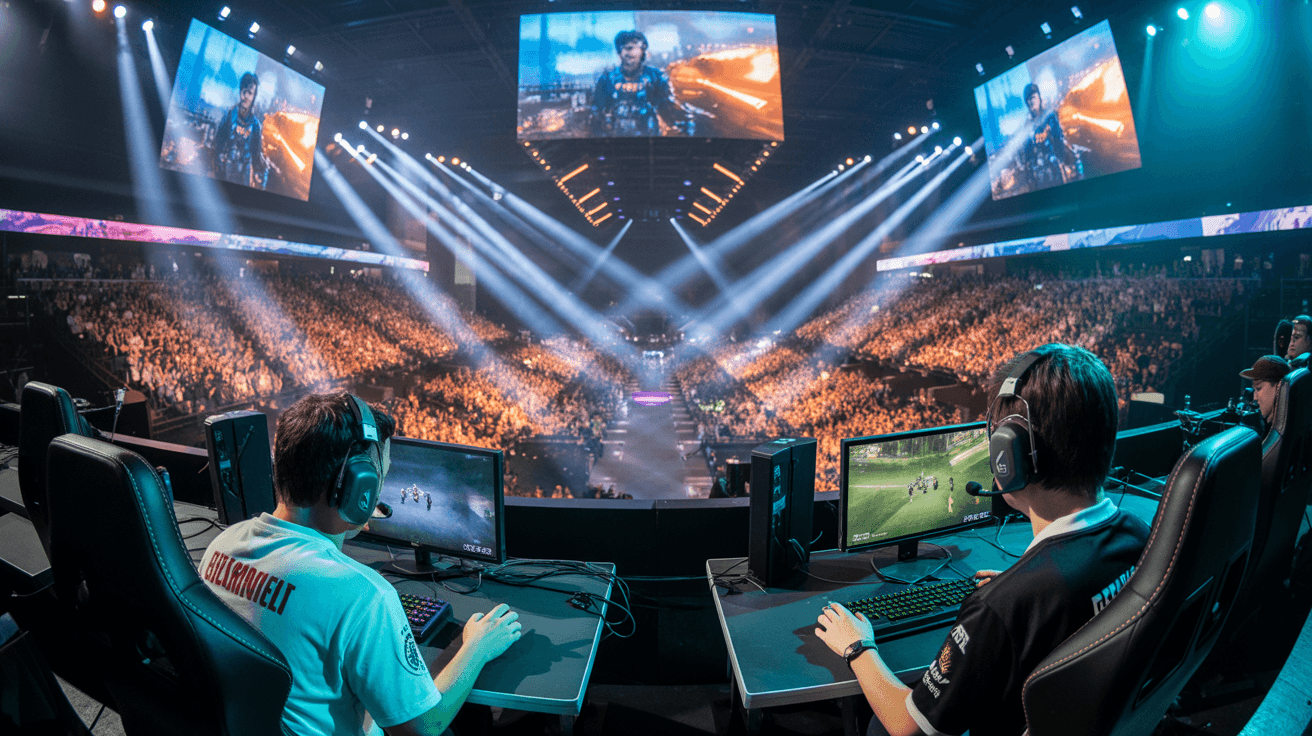
Why eSports Went From “Niche” to Mainstream
eSports didn’t explode because people suddenly started playing games. People were already gaming. The real shift was that watching games became frictionless, and communities formed around players the same way they do around musicians or athletes.
The 5 biggest accelerators (practical breakdown)
- Streaming platforms: Twitch and YouTube made “live competition” accessible to anyone.
- Clips + short-form: TikTok/YouTube Shorts turned highlight moments into viral content.
- Games built for competition: ranked ladders, seasonal updates, tournaments, and spectator modes.
- Global reach: a tournament in Seoul can trend in London within minutes.
- Brand attention: advertisers realized eSports reaches younger audiences traditional TV struggles to reach.
Key insight (that often gets missed):
eSports doesn’t compete only with “sports.” It competes with every other form of entertainment—Netflix, TikTok, music streaming, even gaming itself. The winners are the formats that are easy to watch, easy to share, and community-driven.
How the eSports Industry Makes Money
If you’ve ever asked “Where does the money come from?”, you’re asking the right question. eSports revenue is mostly a mix of sponsorships, media rights, merchandise, and live events—plus support from game publishers.
For market estimates and industry breakdowns, Newzoo is one of the most widely cited sources in eSports reporting: Newzoo Global eSports Market Report (2022).
For a broader, more “official” overview of the eSports ecosystem and business models, I also recommend exploring academic research databases like PubMed, where studies cover topics like spectator behavior, performance, training, and health considerations in competitive gaming: PubMed.
Revenue streams at a glance
Case Study: Fortnite World Cup (The Moment People Took eSports Seriously)
The Fortnite World Cup is still one of the most “mainstream-readable” examples of eSports scaling fast. In July 2019, it offered a $3 million prize for the winner—who was 16 at the time—sparking headlines well outside gaming circles. Business Insider reported on the event’s viewing and streaming details here: Fortnite World Cup coverage.
The real lesson: eSports can manufacture a global moment the same way traditional sports do—except it spreads faster online, because the “highlight content” is built into the viewing experience.
Why eSports Is So Attractive (For Fans, Players, and Brands)
eSports is accessible: you don’t need to live near a stadium or pay for cable. If you have a device and internet, you can watch or play. And because streams have chat, polls, and creator communities, it feels more interactive than most traditional broadcasts.
What fans get out of it
- Constant action: shorter “downtime” than many traditional sports.
- Skill on display: the difference between pro and casual is immediately obvious.
- Community: memes, chat culture, shared reactions.
- Low barrier to entry: you can start watching for free.
What players get out of it
- Multiple income paths: salary, prize money, sponsorships, streaming, content creation.
- Global opportunity: you can be discovered from almost anywhere.
- Clear performance metrics: ranks, stats, tournament results.
What brands get out of it
- Young, engaged audiences: communities that pay attention for hours, not seconds.
- Authenticity (when done right): integrations can feel natural if they match the audience.
- Content that travels: sponsor visibility can spread through clips and highlights.
Actionable: How to Get Into eSports (Without Wasting Time)
People usually land on this article with one of two intentions: (1) they want to follow eSports better, or (2) they want to try competing. Here’s a practical path for both.
If you want to follow eSports as a fan
- Pick one game first: learning one competitive scene beats skimming five.
- Watch “explainer” content: role guides and tournament recaps help you understand the meta quickly.
- Follow 2–3 key teams/players: storylines make matches more fun to watch.
- Use official tournament channels: you’ll get consistent schedules and better production.
If you want to compete (starter roadmap)
- Choose one title and commit for 90 days (switching games kills progress).
- Track your improvement: aim drills, VOD reviews, ranked stats.
- Join structured competition: community tournaments, collegiate leagues, online ladders.
- Build a “proof” profile: clips, stats, tournament placements—anything measurable.
- Protect your health: sleep, breaks, posture, and eye strain management matter more than people admit.
On the health side, it’s worth reading reputable medical guidance on screen time, posture, and repetitive strain—especially if you’re grinding daily. Mayo Clinic has a broad library on healthy habits and avoiding common issues related to prolonged sitting and strain: Mayo Clinic.
FAQ
Is eSports a real sport?
It depends on your definition of “sport,” but eSports clearly functions like one: structured competition, leagues, professional training, coaching, and spectatorship. Even if it’s not physical in the same way as football, it’s undeniably a professional competitive discipline.
How do eSports players make money?
Income usually comes from team salaries, prize winnings, sponsorships, streaming/content revenue, and brand deals. Top players often combine several streams.
What games are the biggest in eSports?
It changes over time, but major genres include MOBAs (like League of Legends), FPS titles (like Counter-Strike), and battle royale games (like Fortnite). Popularity depends on regions, publishers, and tournament support.
How do I start a career in eSports?
Start by specializing in one game, improving through ranked play and reviews, entering community tournaments, and building proof of performance (placements, stats, and clips). Networking in legitimate competitive communities helps, too.
Key Takeaways
- eSports is structured competition—teams, leagues, coaches, tournaments, and professional careers.
- Streaming + short-form content made eSports easy to watch and easy to share, which accelerated growth.
- The business runs on sponsorships and media attention more than traditional TV models.
- Fortnite World Cup showed mainstream scale: huge prizes, massive interest, viral moments.
- To get into eSports, pick one game, track improvement, compete in real tournaments, and build measurable proof.
 Culture & Arts
 Vinyl Records Spin a Comeback: Insights into the Regeneration of Analog
Written by: Jordan H. Culture & Arts Writer (music history, modern listening cultu...
 Culture & Arts
 The Dispute Over Museum Artifacts: A Call for Repatriation?
Written by: Jordan H. Culture & Arts Writer (music history, modern listening cultu...