
Unraveling the Luxury Fashion Boom of 2025
Sophie C.
Buying second-hand used to be something people did quietly. Now it’s one of the smartest moves you can make—financially, stylistically, and honestly, mentally (because it saves you from so many “why did I buy this?” regrets).
Whether you’re shopping thrift stores, browsing resale apps, or hunting designer pieces second-hand, the logic is pretty simple: you’re paying less for something that often has the same function—and sometimes even better quality—than what you’d get brand new.
In this guide, I’ll break down the real financial sense behind second-hand shopping, how to avoid the common traps (fake listings, impulse “deals,” bad-quality items), and how to build a wardrobe that looks expensive without spending like you’re in an awards-season styling budget.
Why second-hand shopping became the “smart consumer” move
Let’s start with the obvious: prices are up. And the quality of some new clothing… isn’t matching those prices.
Second-hand shopping is booming because it solves a few modern problems at once:
- Lower cost per item (you pay less upfront)
- Better value per wear (higher-quality pieces often last longer)
- Less waste (you’re extending the life of existing products)
- Access to unique style (vintage, discontinued, rare finds)
- Less trend pressure (you shop pieces, not hype cycles)
Resale has also become an actual part of the fashion economy—not just a side hobby. For a broader view of how resale and recommerce are growing, the Ellen MacArthur Foundation has solid resources on circular economy principles and why reuse matters. Source: Ellen MacArthur Foundation – Circular economy
Key insight:
Second-hand isn’t “cheap shopping.” It’s strategic shopping—finding quality, fit, and longevity without paying the “new item” markup.
The real money math: why second-hand can be financially smarter
If we’re talking purely financially, the biggest advantage of second-hand shopping is that it can reduce your cost per wear by a lot.
Here’s the simplest way to think about it:
Cost per wear = Price ÷ Number of times you actually wear it
A $200 new jacket you wear 5 times is more expensive (per wear) than a $60 second-hand jacket you wear 40 times. And most people (yes, even stylish people) have pieces in their closet they’ve worn less than five times.
Second-hand is also less risky for experimenting. You can try a new silhouette, color, or brand without paying full price—and if it doesn’t work, you’re not stuck with a painful financial mistake.
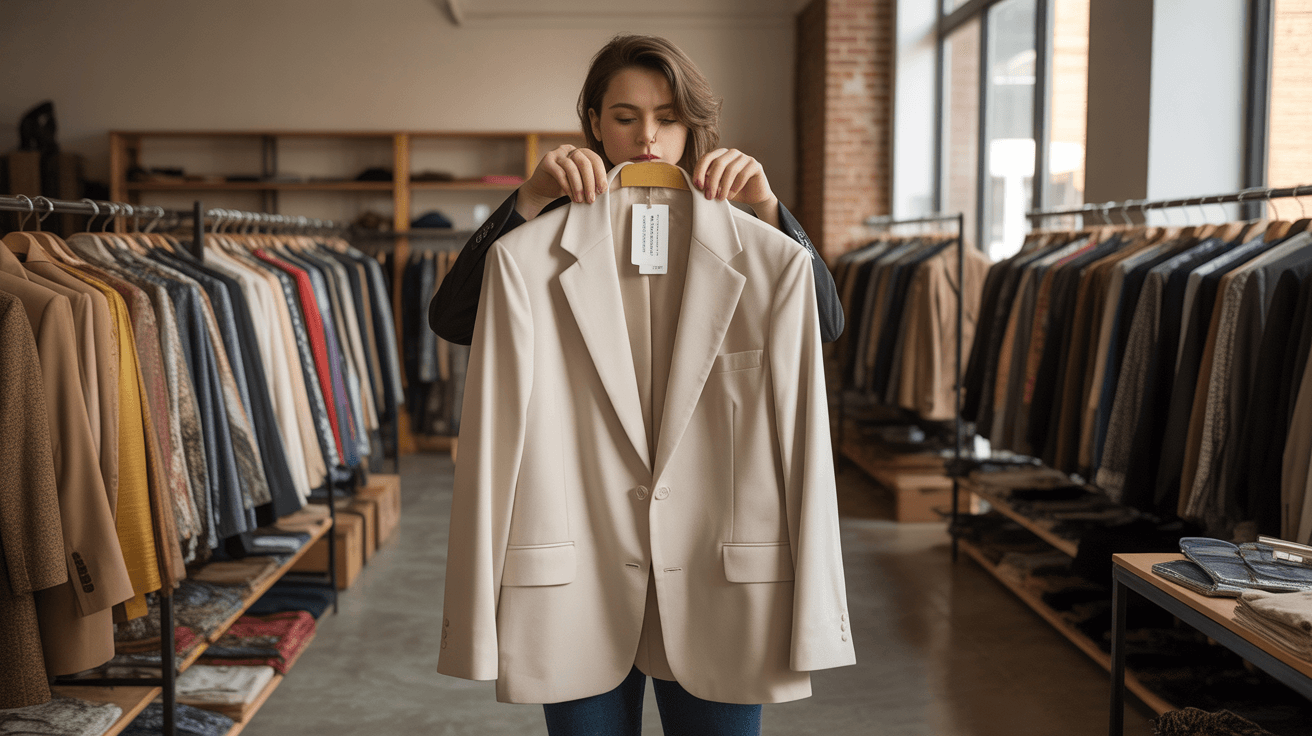
What items are actually worth buying second-hand?
Not everything is a smart second-hand purchase. This is where being strategic matters.
Here are the best categories to prioritize (financially and practically):
- Blazers and coats (tailoring + structure = huge savings)
- Denim (vintage denim is often better quality)
- Wool sweaters (cashmere blends can be found for a fraction of retail)
- Leather bags (especially classic shapes)
- Silk and satin pieces (if condition is good)
- Occasionwear (weddings, events, formal dresses)
And here are categories to approach carefully:
- shoes (fit + wear matters a lot)
- activewear (elastic breaks down over time)
- swimwear (for hygiene + fabric reasons)
- cheap fast-fashion basics (often not worth it even at a discount)
Sophie’s shortcut:
If the item has structure (coats, tailoring, leather), second-hand is usually a win. If the item relies on stretch (leggings, bodysuits), you need to inspect it like a detective.
Second-hand vs new: what you’re really paying for
People assume “new” always means better. But with fashion, what you’re often paying for is:
- marketing campaigns
- new season pricing
- trend timing (“this is the item right now”)
- packaging and retail overhead
Second-hand cuts through that. It’s why some of the best wardrobes I’ve seen aren’t “expensive” wardrobes—they’re well-curated wardrobes.
If you want the bigger consumer angle, the U.S. Federal Trade Commission has guidance on smart shopping and avoiding deceptive practices that can apply even when you’re buying second-hand online. Source: FTC – Consumer Advice
How to avoid the common second-hand shopping traps
Second-hand shopping is amazing, but yes—people get burned. Usually in predictable ways.
Here are the biggest traps (and how to dodge them):
1) “It’s a deal” impulse buying
If you’re buying it only because it’s cheap, it’s not a deal—it’s clutter.
Fix: Ask, “Would I buy this at full price?” If the answer is no, skip it.
2) Fake designer listings
Luxury resale is full of amazing finds… and also fakes that look convincing in photos.
Fix: Buy through platforms that offer authentication, or request clear photos of logos, serial numbers, stitching, and hardware. If the seller avoids details, that’s your sign.
3) Hidden damage that makes the item unwearable
Small stains, stretched seams, broken zippers—these things add up.
Fix: Always check photos closely and ask for condition details. If you’re thrifting in person, inspect under arms, hems, and the inside lining.
4) Buying the wrong size because “close enough”
Second-hand sizing can be inconsistent, especially with vintage pieces.
Fix: Focus on measurements (shoulders, waist, inseam), not just size tags.
A practical second-hand shopping checklist (use this every time)
- Check fabric tag: wool, cotton, linen, silk, leather = usually worth it
- Inspect seams: any pulling, loose stitching, or stretched areas?
- Smell test (in-person): smoke/mildew can be hard to remove
- Look at the lining: good lining = better construction
- Search the retail price: make sure the “deal” is real
- Plan your outfits: can you wear it 3 different ways?
Second-hand shopping strategy: where to buy + what to expect
Not all second-hand shopping is the same experience. Some places are best for vintage. Others are best for barely-worn modern pieces.
How to make second-hand shopping feel “intentional,” not chaotic
The difference between “smart thrifting” and “random thrifting” is planning.
If you want second-hand shopping to actually improve your wardrobe, here’s what I recommend:
- Make a list of 5 wardrobe gaps (ex: black blazer, winter coat, jeans that fit)
- Choose a color palette so everything mixes easily
- Prioritize fit first (you can tailor quality pieces)
- Buy fewer, better items (don’t chase “hauls”)
- Resell what doesn’t work so your closet stays clean
The underrated win:
Second-hand shopping teaches you to slow down. When you’re not chasing “new arrivals,” you start choosing pieces for function, style, and longevity.
FAQ
Is buying second-hand always cheaper?
Not always. Some resale prices can be inflated (especially for trendy pieces). The smart move is checking original retail price and comparing similar listings before buying.
What’s the best thing to buy second-hand?
Coats, blazers, denim, and quality knitwear are usually the best value because they hold up well and cost a lot when bought new.
Is second-hand shopping safe for luxury items?
It can be, but you need to be careful. Use platforms with authentication options, request detailed photos, and avoid listings with vague descriptions or suspiciously low prices.
How do I stop impulse buying “good deals”?
Only buy items that fit your wardrobe plan. If you can’t style it three ways with what you already own, it’s not the kind of deal that helps you long-term.
Does second-hand shopping really help the environment?
Yes, because it extends the life of products and reduces demand for new production. It’s not a perfect solution, but it’s one of the most accessible ways to shop more sustainably.
Key Takeaways
- Second-hand shopping is financially smart because it lowers cost-per-wear and reduces buying mistakes.
- The best second-hand buys are structured pieces: coats, tailoring, denim, leather.
- Be cautious with stretch-heavy items like activewear and anything with hygiene concerns.
- Impulse buying “because it’s cheap” is the #1 second-hand shopping trap.
- Always inspect condition, measurements, and real retail value before purchasing.
- Second-hand works best with a plan: wardrobe gaps, color palette, and outfit potential.
- The biggest benefit isn’t just saving money—it’s building a better, more intentional wardrobe.
 News
News Navigating the World of Viral Social Media Trends
Written by: Emma R. News & Digital Culture Writer (social media, streaming, intern...
 Fashion
 Quiet Luxury vs. Logo Mania
Written by: Sophie C. Fashion & Red Carpet Editor (runway trends, celebrity style,...